

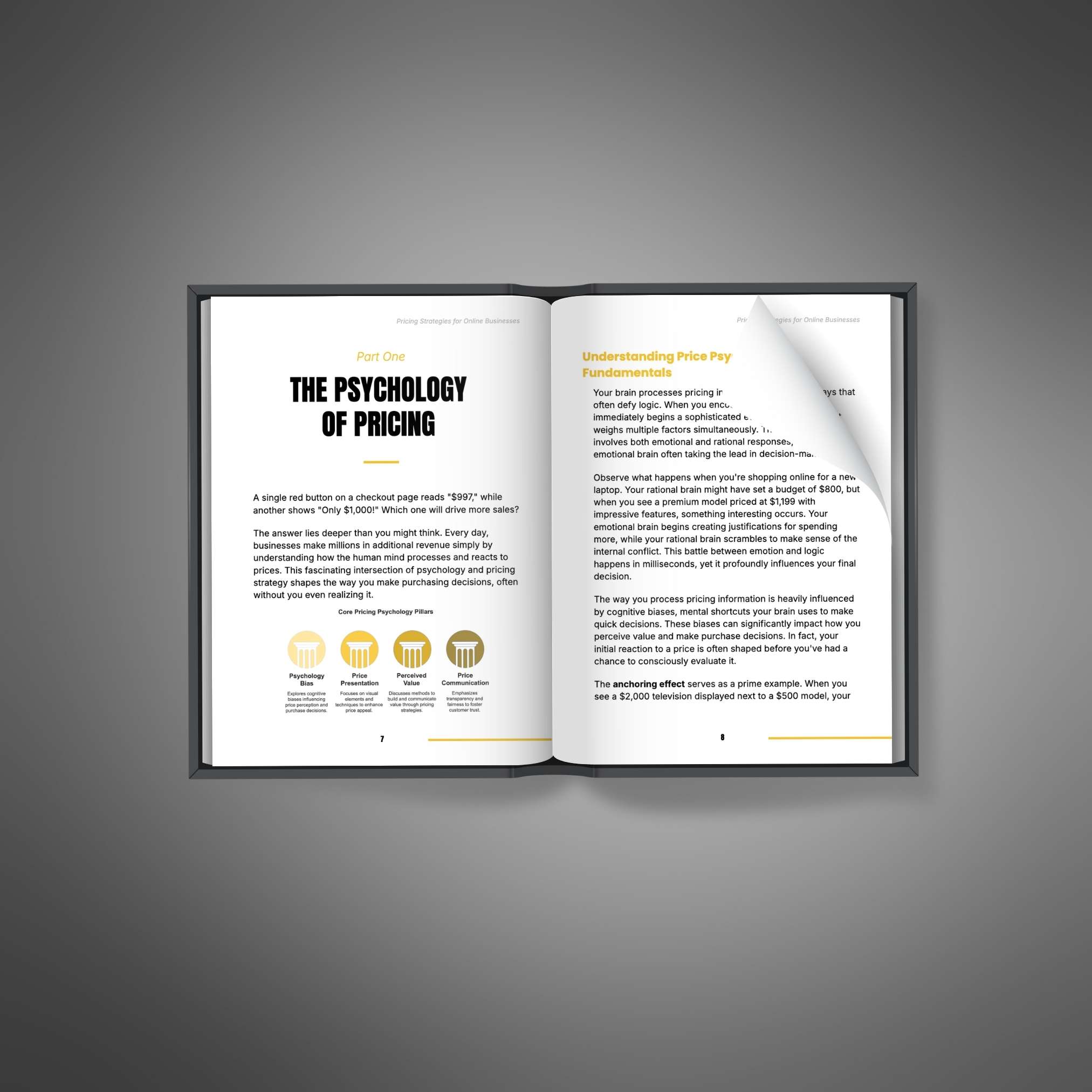
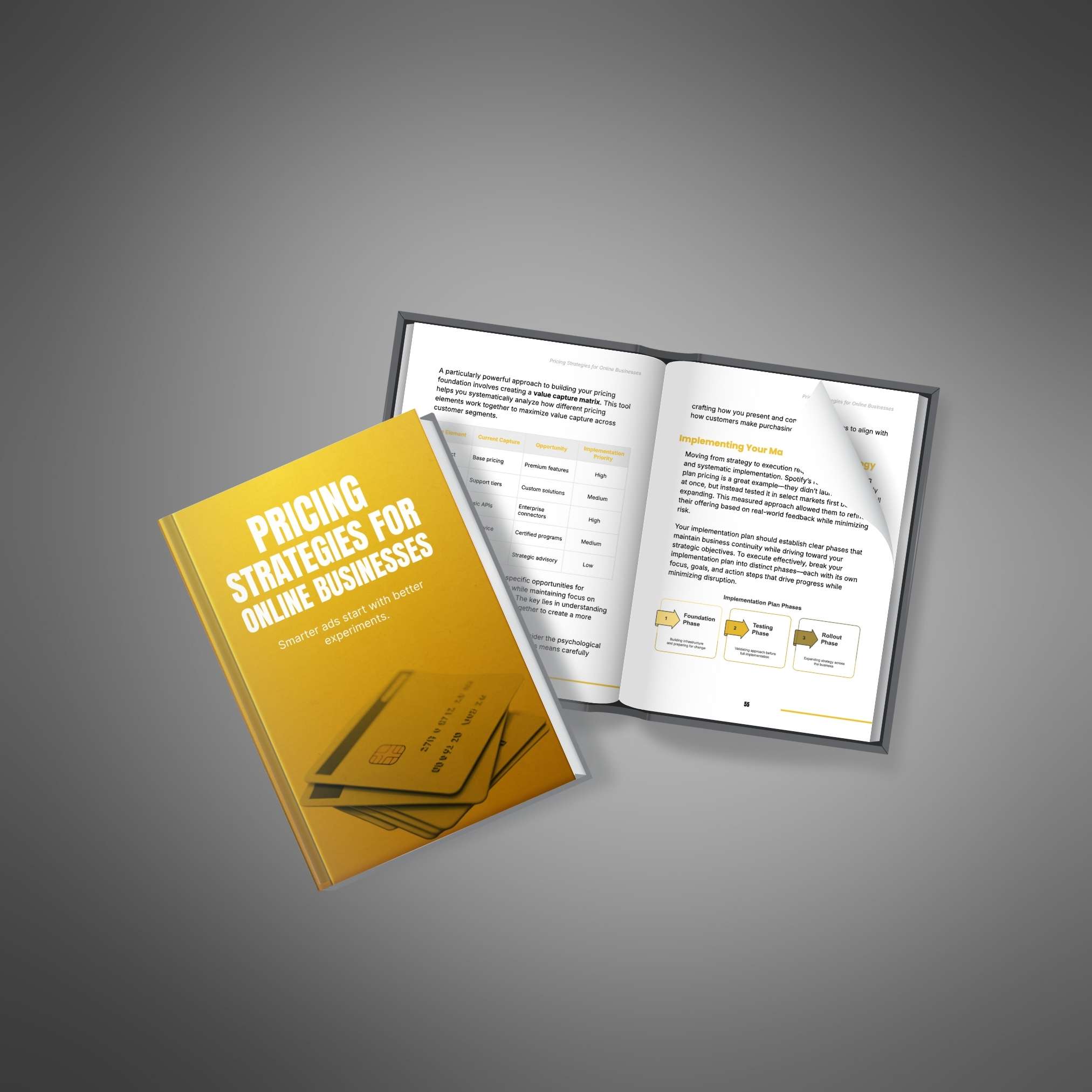
Pricing Strategies for Online Businesses is an ebook about choosing and reviewing prices for digital products or services. Pricing is more than calculating a number: it also shapes expectations, communicates value and affects how an offer compares with alternatives. This guide explores those relationships so you can examine pricing as a business decision rather than defaulting to the lowest price.
The book introduces pricing psychology, value-based pricing, different pricing models and the use of discounts. It connects what a business charges with how that price is presented and understood. The emphasis is on a considered approach that fits the offer and its audience, not a universal formula or a promise that raising or lowering a price will automatically improve results.
What you will learn about online pricing
- Understand reactions to price: Explore how a price can influence perceptions of an offer before someone buys.
- Communicate pricing clearly: Consider how presentation and explanation can support trust rather than create uncertainty.
- Examine pricing models: Think through approaches relevant to digital products and services instead of assuming one model suits every business.
- Explore value-based pricing: Consider the usefulness of an offer to the customer as part of the pricing decision.
- Compare competitors thoughtfully: Use alternatives as context without treating price matching as the only way to compete.
- Review discounts and profitability: Look at promotions as deliberate choices, with implications for both margin and brand perception.
Who this ebook is for
This guide is intended for online-business owners, digital-product creators and service providers reviewing how they charge. It is relevant when you are setting an initial price, questioning an existing one or relying on discounts without a clear longer-term approach. Readers can use its themes to organize pricing questions before testing changes in their own market.
Build a pricing approach you can revisit
Choose one offer and consider its audience, perceived value and current alternatives. Review whether the pricing model and explanation support that offer, then identify a focused question to investigate. Revisit the decision as you learn more about customer responses and business needs. Thoughtful pricing requires context and ongoing review; a competitor’s number alone cannot tell you what your own offer should cost.
Book details
Format: Ebook. Supplier-listed main book: 60 pages and 8,042 words.
Download availability: After payment, download the complete ZIP package or the included PDF separately.