



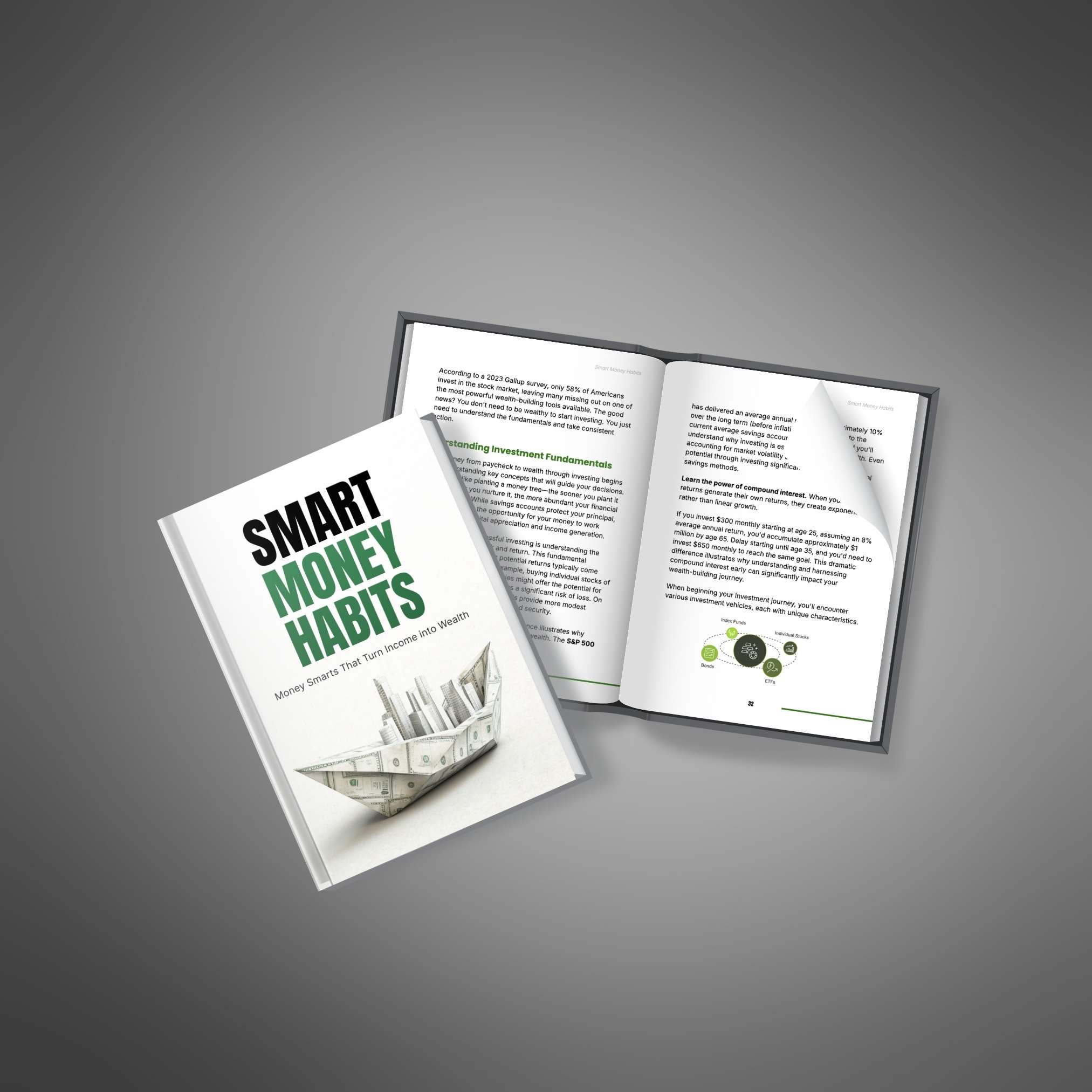
Smart Money Habits introduces everyday financial practices that can support a more deliberate relationship with money. This ebook brings budgeting, saving, debt reduction and basic investing into one learning resource, with attention to the habits and attitudes that influence whether a plan is maintained after the initial burst of motivation.
Rather than treating financial progress as a single dramatic decision, it looks at repeatable choices and the systems behind them. Topics include organizing a budget, setting savings goals, using automation thoughtfully and considering longer-term financial priorities. The emphasis is on building understanding and consistency, not promising a particular level of wealth or independence.
What you will learn
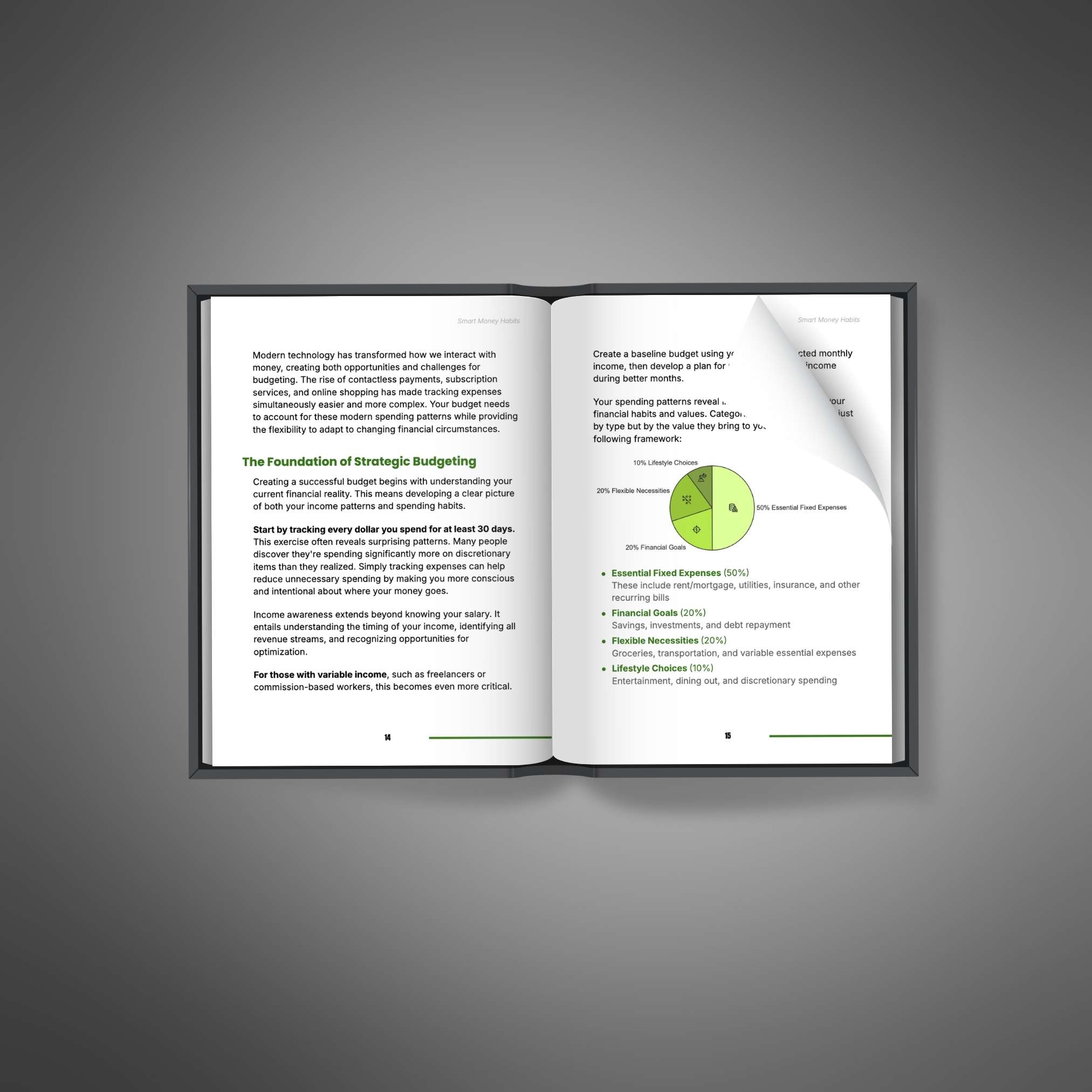
- Give a budget a practical role: Explore how a spending plan can connect available money with current commitments and future goals rather than becoming a list of restrictions you cannot maintain.
- Make saving more intentional: Consider how clearer goals and regular routines can help you decide what to put aside and review whether your approach still fits your situation.
- Understand financial automation: Look at automatic processes as tools that need appropriate setup and ongoing attention, not as a reason to stop checking what is happening.
- Review debt alongside other priorities: Explore approaches to reducing financial obligations while recognizing that saving, essential spending and repayment decisions need to be considered together.
- Learn investment fundamentals: Build familiarity with basic investing ideas before making decisions, keeping uncertainty and the need for further research or qualified guidance in view.
- Strengthen the habit behind the plan: Reflect on the attitudes, fears and recurring behaviors that can influence money choices even when the arithmetic of a plan seems straightforward.
Who this ebook is for
This ebook is intended for readers who want an accessible starting point for more organized personal money management. It may suit someone building a first workable budget, reviewing debt or learning the language of saving and investing. Readers already following a financial plan can use the topics as prompts for a more consistent review of their own routines.
Put the ideas into practice
Pick one financial habit to observe before trying to redesign everything at once. Record what you currently do, what makes it difficult and the outcome you want the habit to support. Use the book to identify a manageable next step and a date to review it. This is general financial education, not individualized investment, debt, tax or financial advice; outcomes depend on circumstances and decisions.
Book details
Format: Ebook. Supplier-listed main book: 51 pages and 7,621 words.
Download availability: After payment, download the complete ZIP package or the included PDF separately.