

Cut Smart looks beyond the immediate appeal of a smaller expense total. This ebook examines how to reduce business spending while protecting the activities that help the business earn revenue and continue operating. Its central question is whether a proposed saving improves the business or simply postpones a more expensive problem.
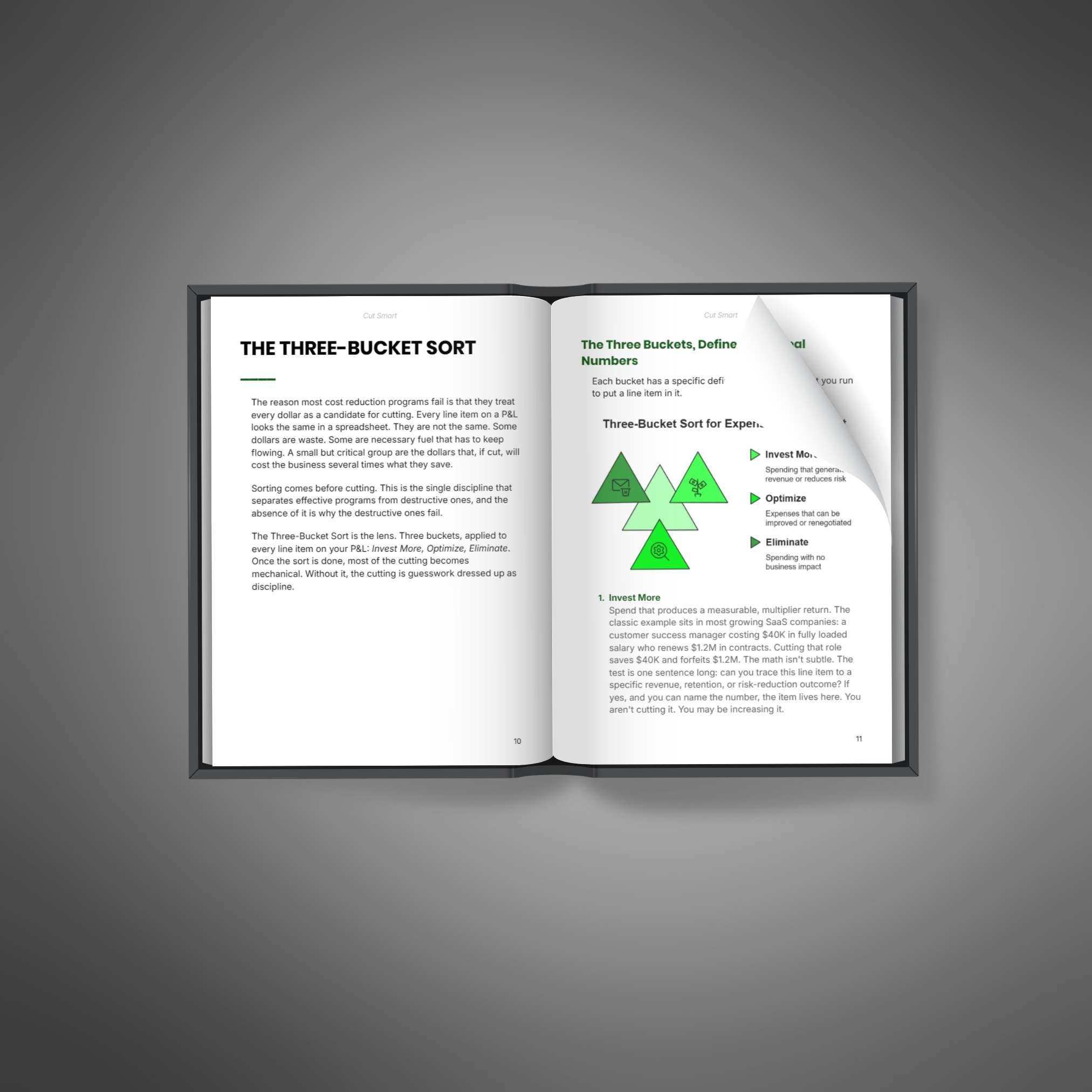
The book introduces a way to sort spending into Invest More, Optimize or Eliminate, alongside tests for questioning cuts before acting. It also explores why applying the same percentage reduction everywhere can miss important differences between costs. The emphasis is on choosing deliberately, rather than treating every expense as equally expendable.
What you will learn
- Sort costs by their purpose: Consider what each line item contributes before deciding whether it deserves more investment, a more efficient approach or removal from the business.
- Question apparently easy savings: Explore how an expense that looks like overhead may still protect customer experience, delivery or the activities that generate income.
- Test before committing: Use the book's discussion of checks on proposed cuts to think through what could change beyond the immediate reduction in spending.
- Avoid blanket reductions: Understand why cutting every budget by the same proportion can obscure which activities are productive and which genuinely need a different approach.
- Watch the timing of consequences: Recognize that a saving may appear immediately while damage to the business emerges later, making the initial result an incomplete measure of success.
- Give savings a considered purpose: Think about whether released funds should support better-performing activities, strengthen the business position or meet another clearly defined operational need.
Who this ebook is for
This ebook is intended for founders, small-business owners and operators reviewing expenses under pressure or preparing for a more disciplined planning cycle. It is relevant when reducing costs is necessary but you want to avoid weakening the work that customers value. It offers a decision-making perspective rather than a promise that any particular cut will deliver growth.
Put the ideas into practice
Choose one category of spending and describe the job it performs before setting a reduction target. Consider what would happen if the expense disappeared, what could be optimized instead and how you would notice a harmful effect. Review the decision again after implementation, not just when the first saving appears. For accounting, staffing or contractual implications, use appropriately qualified professional guidance.
Book details
Format: Ebook. Supplier-listed main book: 68 pages and 11,216 words.
Download availability: After payment, download the complete ZIP package or the included PDF separately.