



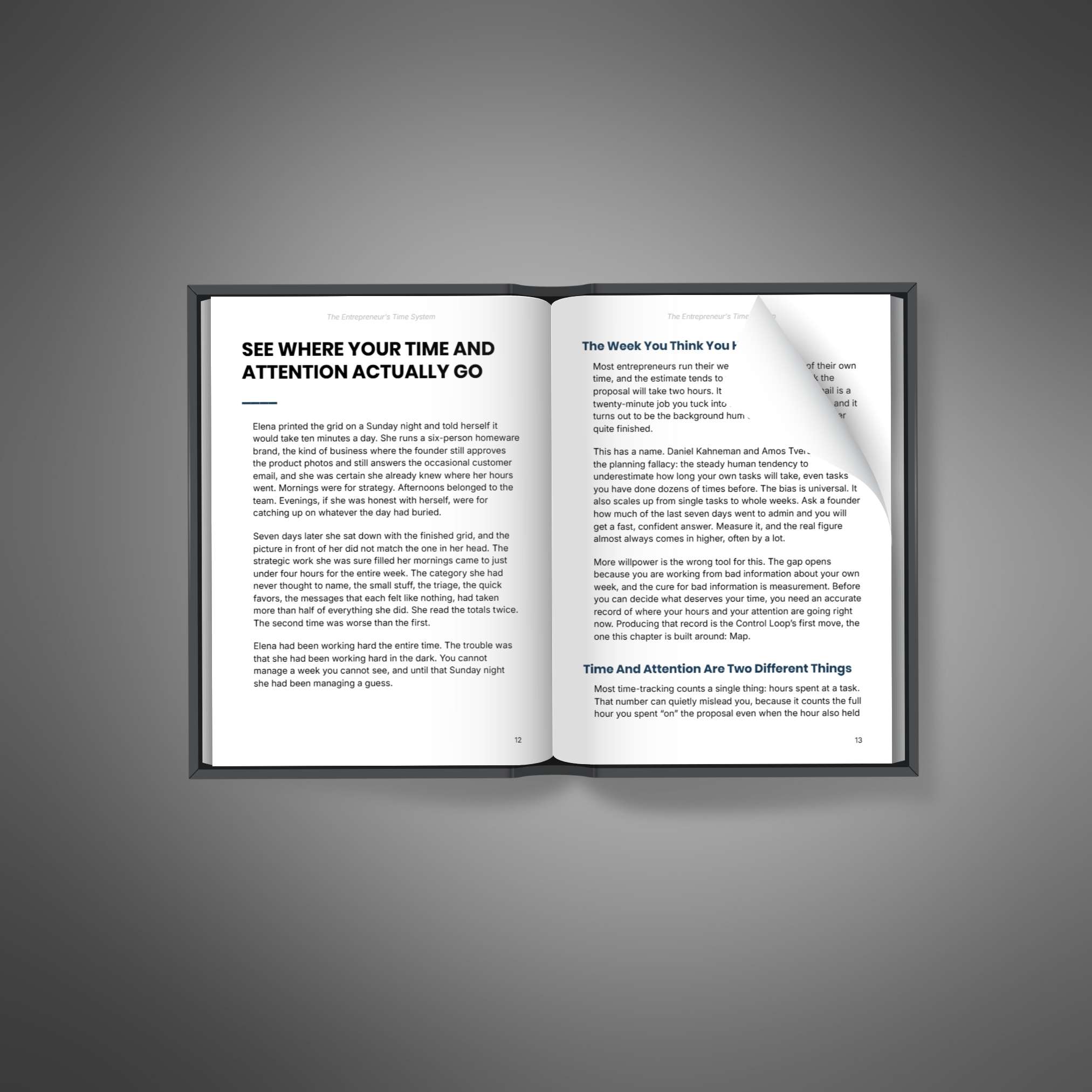


Entrepreneur's Time System is an ebook about organizing a week that rarely follows a perfect schedule. It starts from the reality of running a business: interruptions arrive, priorities move and essential work competes with immediate requests. Instead of assuming that more discipline alone will solve every scheduling problem, it explores a system designed around those conditions.
The book introduces three weekly anchors, a 20-minute Sunday planning process and a shutdown ritual for closing open loops. These ideas are brought together as a routine you can revisit when a day becomes reactive. The emphasis is on designing and recovering the week, not creating a timetable that only works when nothing unexpected happens.
What you will learn
- Recognize a poor fit: Consider why familiar productivity systems can become difficult to maintain when an entrepreneur's responsibilities change throughout the week.
- Identify weekly anchors: Explore the proposed three-anchor framework and how a few deliberate decisions can help hold the shape of a busy week.
- Plan with a short setup: Use the book's 20-minute Sunday design process as a structured opportunity to review priorities before the next week begins.
- Close open loops: Understand the purpose of a shutdown ritual and how ending a work period deliberately can support the next planning decision.
- Handle reactive days: Consider ways to respond when urgent work interrupts the plan without treating one difficult day as the loss of the entire week.
- Maintain the system: Connect weekly design with ongoing review so the routine can be adjusted to the business rather than followed mechanically.
Who this ebook is for
This ebook is for entrepreneurs, small-business owners and solo operators whose schedules include both planned work and frequent interruptions. It is especially relevant if you repeatedly abandon a productivity system once the week gets busy. Readers managing several roles can use its themes to examine how they decide what deserves attention and how they finish the working day.
Put the ideas into practice
Look back at a recent week and identify where the plan stopped matching reality. Before planning the next one, distinguish work that needs protected attention from responsibilities that are likely to remain reactive. Try the suggested weekly setup and a manageable end-of-day review, then note which parts help and which need adjustment. Use the framework as a planning aid rather than a judgment about personal productivity. Your workload, commitments and available support will affect what a realistic week can contain.
Book details
Format: Ebook. Supplier-listed main book: 67 pages and 11,589 words.
Download availability: After payment, download the complete ZIP package or the included PDF separately.