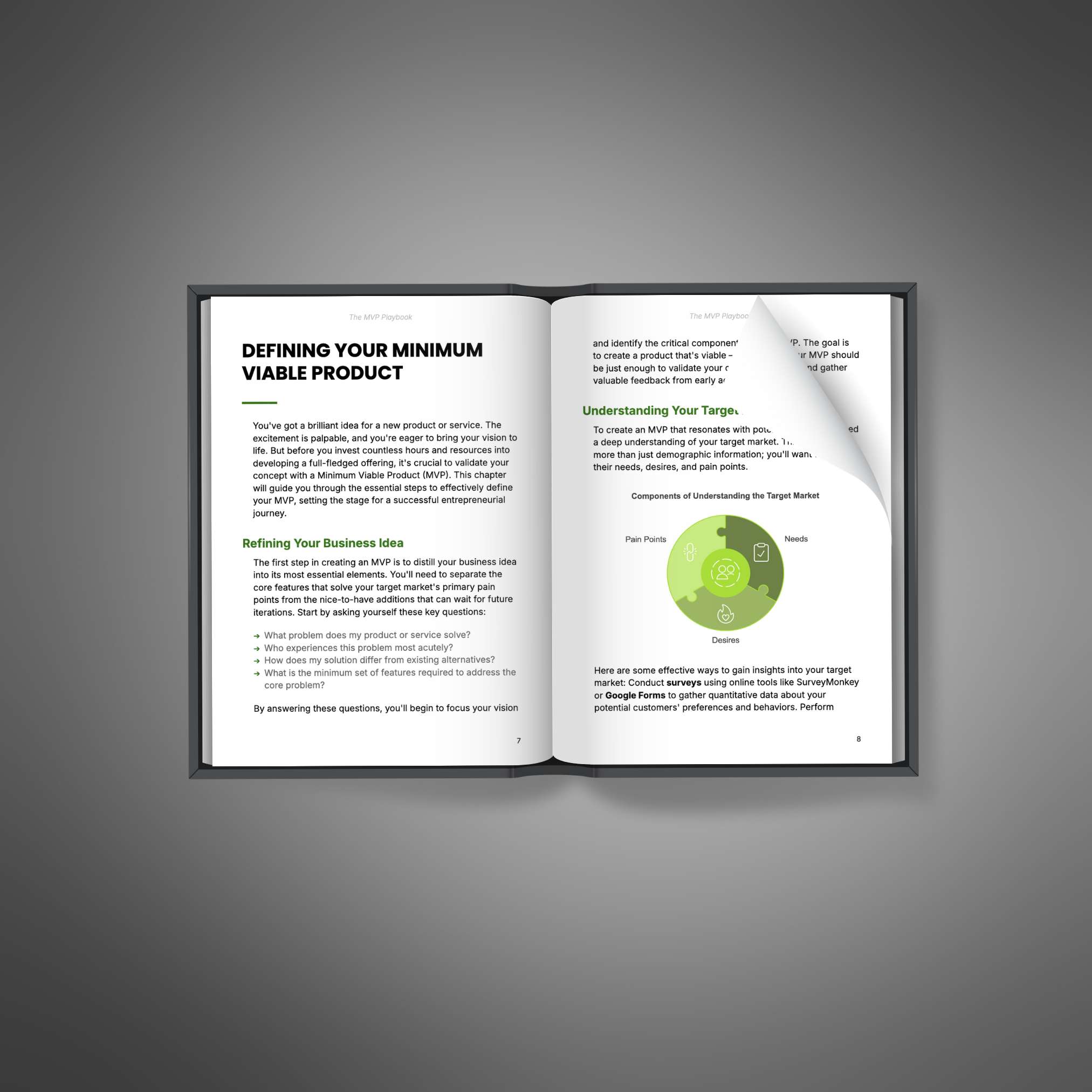
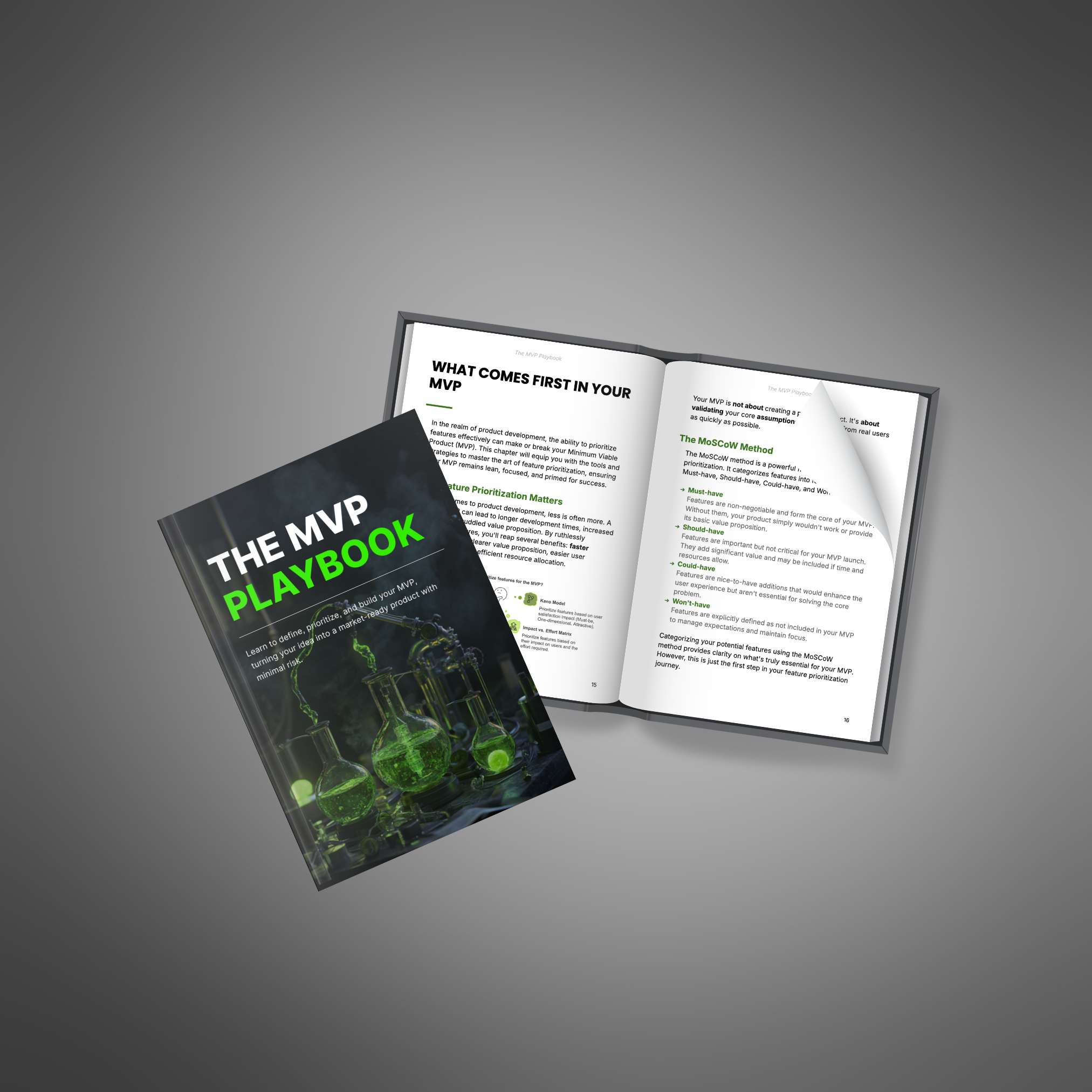
MVP Playbook combines the main ebook with its retained checklist, guide, prompt pack and workbook. The collection examines how a minimum viable product can help you learn about an idea before committing to a broader build. It connects a limited initial scope with the feedback and decisions that should follow the first version.
The main book discusses defining an MVP, prioritizing features, using prototypes and working with early-user feedback. It also considers the balance between speed and quality. The goal is to make a test more purposeful and manageable, not to suggest that a small product eliminates commercial risk or automatically proves that a market exists.
What you will learn
- Define what the first version should test: Connect the MVP with an important question about the idea, so that reducing scope does not become an exercise in removing features without a clear purpose.
- Prioritize the essential work: Consider which capabilities are needed for a useful initial experience and which can wait until you have better evidence about what users require.
- Use prototypes and feedback deliberately: Explore ways to learn from an early representation or version of the product while paying attention to the limits of the feedback you receive.
- Improve through a review cycle: Think about how observations from early use can inform a next step, balancing the desire to move quickly with the quality required for the proposed test.
Included in this collection
- MVP Playbook – Ebook (1 PDF).
- MVP Playbook – Checklist (1 PDF).
- MVP Playbook – Guide (1 PDF).
- MVP Playbook – Prompts (1 PDF).
- MVP Playbook – Workbook (1 PDF).
Who this collection is for
This collection is intended for entrepreneurs, startup teams and product-minded readers evaluating a new idea or an early build. It can be useful when a feature list has grown larger than the question you originally wanted to answer. The material provides planning and learning principles, not a guarantee of investment, market demand or a successful launch.
Put the ideas into practice
Write down one assumption that could materially affect your idea, then describe what you would need to observe to learn more about it. Use the book to consider an appropriate initial scope and the companion resources to organize the work. Invite relevant feedback, record limitations and decide what would justify another iteration. Keep safety, privacy and other obligations in view when involving real users.
Collection details
Format: PDF collection. Across all 5 retained PDFs: 86 total pages and 12,025 written words. Counts include covers, contents and repeated page text.
Download availability: After payment, download the complete ZIP package or any of the 5 included PDFs separately.